Natural Disinfectants That Actually Kill Germs
Quick Summary
This guide explains which natural disinfectants kill germs on household surfaces and which natural products only clean or sanitize. It covers nine common ingredients, including white vinegar, hydrogen peroxide, tea tree oil, alcohol and steam, with the strength and contact time each one needs to work. It also covers the mixtures to avoid and the surfaces to keep vinegar away from. Written for Dallas and Fort Worth homeowners who want a genuinely non-toxic home.
Keeping Your Home Safe Without Harmful Chemicals
Disinfecting your home is essential for maintaining a healthy environment, but conventional disinfectants often contain harsh chemicals that can pose risks to your health and the environment. Natural alternatives handle most everyday cleaning, and a few of them genuinely disinfect once you use the right strength and give them enough time on the surface. At Organically Maid, we believe in the power of organic and non-toxic solutions. Here’s how you can use natural disinfectants to clean your home without harmful chemicals.
Cleaning, Sanitizing and Disinfecting Are Not the Same Thing
- These three words get used interchangeably, and the difference matters most when someone in the house is unwell.
- Cleaning removes dirt, grease and organic matter with soap or detergent. It does not kill germs.
- Sanitizing reduces bacteria on a surface. The EPA notes that sanitizing is not intended to kill viruses.
- Disinfecting kills bacteria and viruses, and in the United States only EPA-registered products can make that claim.
Dirt shields germs from whatever you spray on top, so clean the surface first, then disinfect and let it stay visibly wet for the full contact time. Vinegar, lemon juice, baking soda and castile soap belong in the first two groups. Hydrogen peroxide, 70% alcohol, thyme-derived thymol and steam do the heavier work.
Nine Natural Disinfectants and Cleaners for Your Home
1. White Vinegar: The Multi-Purpose Hero
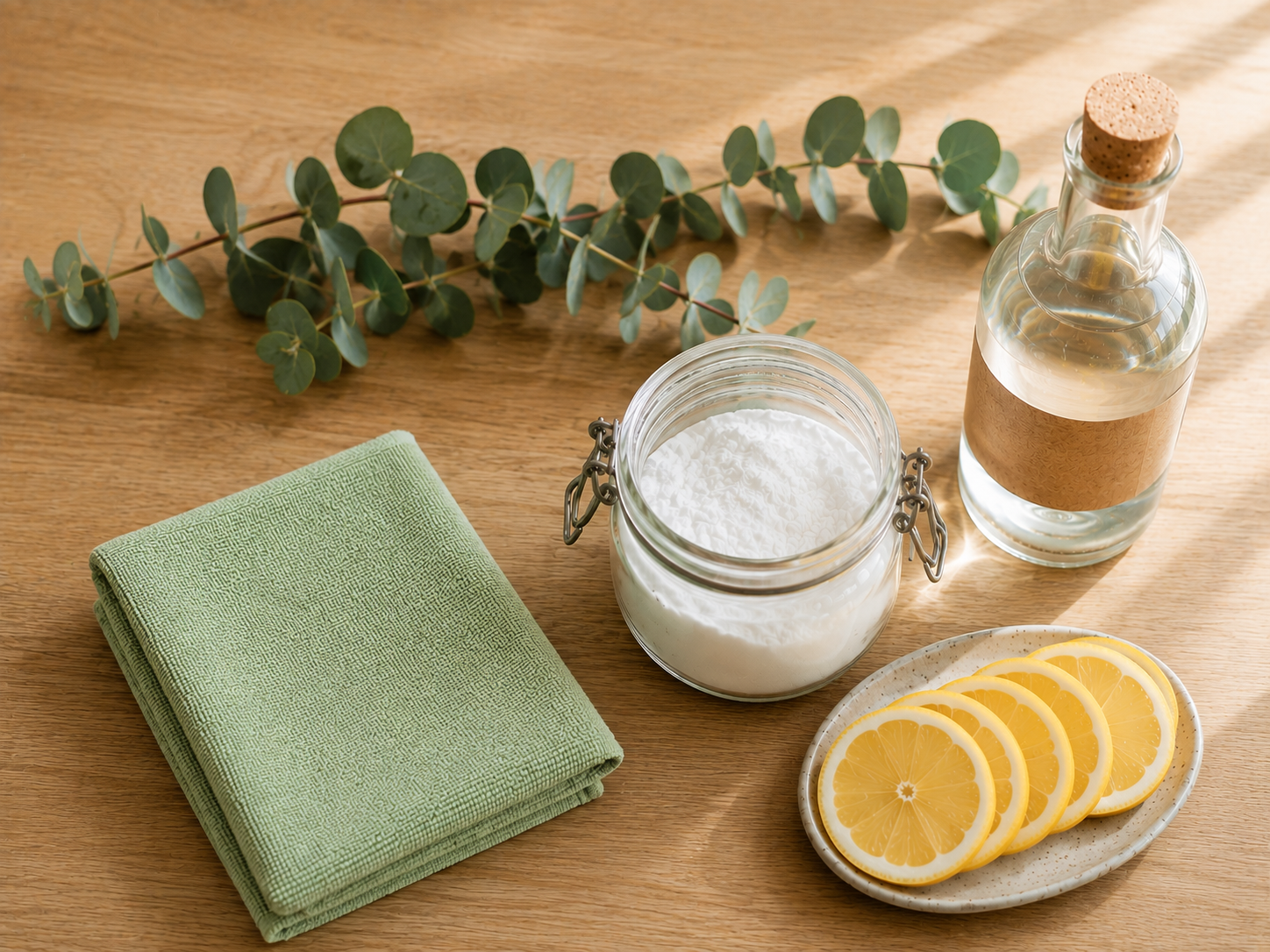
White vinegar is a staple in organic cleaning for good reason. The acetic acid in vinegar breaks down germs, making it effective for general cleaning and sanitizing. Household vinegar is not EPA-registered as a disinfectant, so treat it as a cleaner and a mild sanitizer rather than a replacement for one.
- How to use: Mix equal parts white vinegar and water in a spray bottle.
- Spray countertops, sinks, doorknobs and light switches, then keep the surface wet for 10 minutes before wiping clean.
- Keep vinegar off marble, granite, travertine, unsealed grout and cast iron, because the acid etches them permanently.
2. Hydrogen Peroxide: A Potent Germ Killer
Hydrogen peroxide is another excellent natural disinfectant, capable of eliminating bacteria, viruses, and fungi. It's particularly useful in kitchens and bathrooms where germs tend to accumulate. It is one of the few natural actives that appears in EPA-registered disinfectants.
- How to use: Pour 3% hydrogen peroxide an opaque spray bottle and apply directly to surfaces. Let it sit for at least 10 minutes before wiping clean.
- You can also use it to disinfect cutting boards and other food prep areas.
- Store it away from light, and never premix it with vinegar in the same bottle.
3. Tea Tree Oil: A Natural Antimicrobial
Tea tree oil is well-known for its antibacterial, antiviral, and antifungal properties. It’s a great addition to any natural cleaning routine, providing an extra layer of protection without harmful chemicals. Thymol, the active compound in thyme oil, is registered with the EPA as a disinfectant ingredient, which is why plant-derived oils turn up in some commercial disinfectants.
- How to use: Add 10-15 drops of tea tree oil to a spray bottle filled with water and a splash of white vinegar. Shake well and spray on surfaces to disinfect.
- This solution is ideal for cleaning shower curtains, bathroom floors, and even air vents.
- Shake before every use, since oil and water separate, and allow a full 10 minutes of wet contact.
4. Lemon Juice: Nature’s Acidic Cleaner
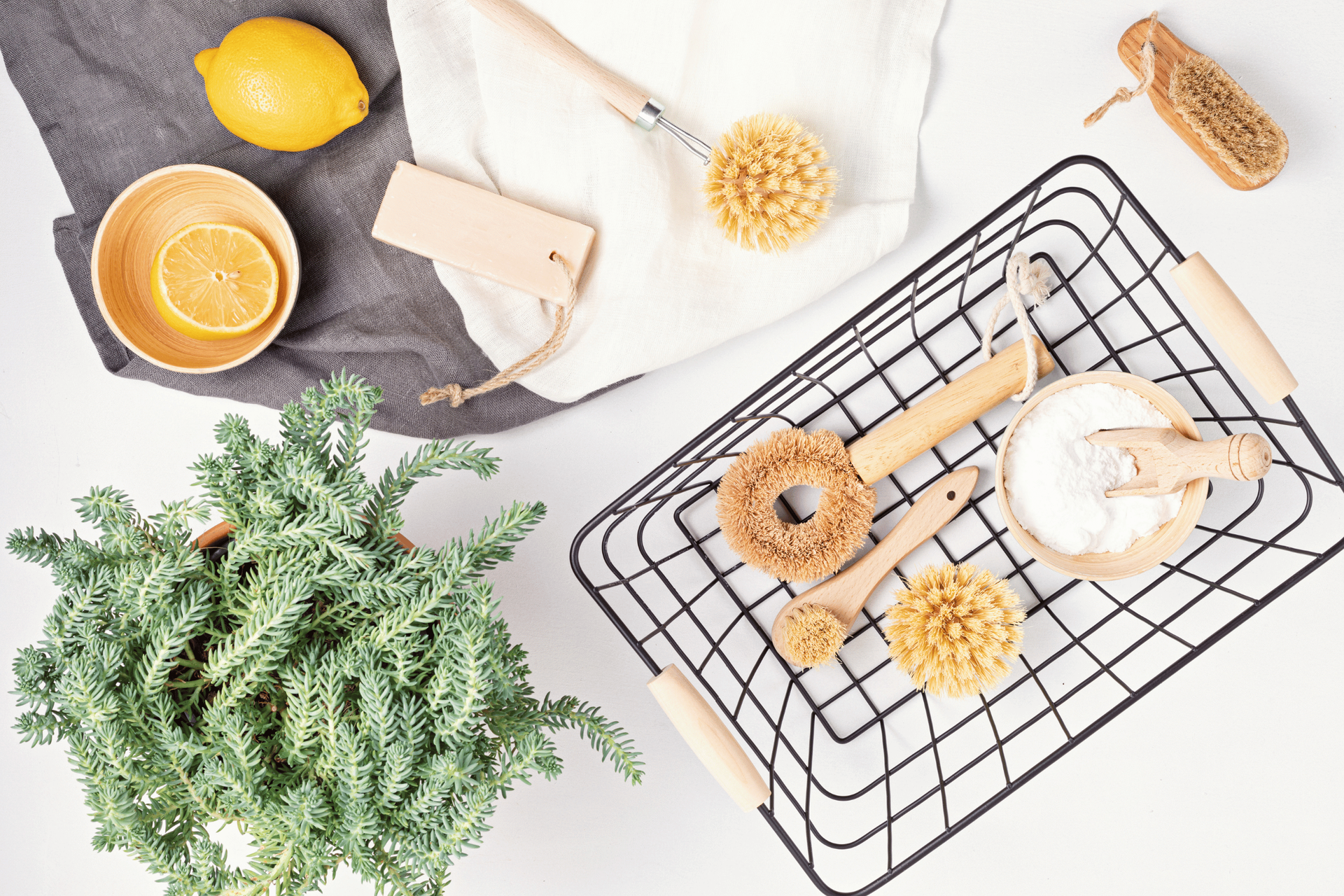
Lemon juice’s acidity makes it a natural germ fighter. It cuts through grease and leaves a fresh scent, and the citric acid reduces bacteria on a surface without reaching disinfectant strength.
- How to use: Combine lemon juice with water and use it to clean kitchen surfaces, cutting boards, and sinks.
- For an added boost, mix lemon juice with vinegar or baking soda to tackle tougher messes.
- Use it freshly squeezed, because the acidity fades within about a day.
5. Essential Oils: A Fragrant and Effective Solution
Many essential oils, such as lavender, eucalyptus, and thyme, have powerful antimicrobial properties that make them perfect for natural disinfecting. They leave your home smelling fresh without artificial fragrance, though on their own they slow germs down rather than eliminate them. Citrus and pine oils also react with indoor ozone, so ventilate the room and skip scented sprays around anyone with asthma.
- How to use: Add 10-15 drops of your favorite essential oil (eucalyptus, lavender, or thyme) to a spray bottle filled with water. Use this mixture to freshen and wipe down surfaces throughout your home, from countertops to bathroom sinks.
- Essential oils are especially great for creating a calming atmosphere while you clean.
6. Baking Soda: Scrub and Sanitize
Baking soda is a gentle yet effective cleaner that can help sanitize surfaces without scratching or damaging them. While it’s not a disinfectant on its own, it works well when combined with other natural ingredients like vinegar or hydrogen peroxide.
- How to use: Sprinkle baking soda on surfaces such as kitchen counters or bathtubs, then spray with vinegar or hydrogen peroxide. Let the mixture fizz for a few minutes before scrubbing with a sponge and wiping clean.
- Vinegar and baking soda neutralize each other as they fizz, so use the reaction to lift grime and follow with hydrogen peroxide when you need to kill germs.
7. Castile Soap: A Plant-Based All-Purpose Cleaner
Castile soap, made from natural oils like olive or coconut, is an eco-friendly cleaner that lifts soil so a disinfectant can reach the surface underneath. It’s gentle enough for daily use but tough enough to clean and sanitize. It’s gentle enough for daily use but tough enough to clean and sanitize.
- How to use: Mix a few drops of castile soap with water for an all-purpose cleaning solution. Leave the vinegar out, because acid curdles the soap and cancels its cleaning power.
- Use it to clean everything from floors to countertops.
- You can also add a few drops of essential oils for a natural fragrance and extra germ-fighting power.
8. Alcohol: A Quick and Effective Disinfectant
Alcohol (specifically isopropyl alcohol) is a potent disinfectant that kills bacteria and viruses on contact. It evaporates quickly, making it ideal for use on electronics and high-touch areas. At 70% it is strong enough to be recognized as a disinfectant, and diluting it further makes it weaker rather than gentler.
- How to use: Apply 70% isopropyl alcohol directly to surfaces like smartphones, keyboards, remote controls, and doorknobs. Simply spray or wipe with a cloth soaked in alcohol to disinfect.
- Let the surface air dry instead of wiping it straight away. Vodka is too dilute at around 40% to disinfect, so keep it for lifting stains.
9. Steam Cleaning: Chemical-Free Germ Elimination
Steam cleaning is a natural and effective way to disinfect surfaces using nothing but water. The high heat kills germs, bacteria, and viruses, making it a great chemical-free option for floors, countertops, and even upholstery. Steam needs to reach roughly 175°F and stay on the surface for about three minutes, so move the head slowly.
- How to use: Use a steam cleaner on hard surfaces like tile, stone, and sealed wood floors. Steam is also ideal for cleaning carpets, curtains, and upholstered furniture.
- The heat from the steam kills germs and sanitizes without the need for any additional cleaning agents.
Contact Times at a Glance
- White vinegar (5% acetic acid), 10 minutes of wet contact, cleans and sanitizes.
- Hydrogen peroxide (3%), 10 minutes of wet contact, disinfects.
- Isopropyl alcohol (70%), leave to air dry, disinfects.
- Tea tree or thyme oil (10 to 15 drops per bottle), 10 minutes, sanitizes.
- Steam (175°F or hotter), 3 minutes, disinfects hard non-porous surfaces.
- Lemon juice (fresh), 10 minutes, cleans and lightly sanitizes.
- Baking soda and castile soap, cleaners only, no disinfectant claim.
What Never to Mix
- Vinegar and hydrogen peroxide in one bottle, which forms corrosive peracetic acid. Apply one, wipe it off, then apply the other.
- Vinegar or any acid with chlorine bleach, which releases chlorine gas.
- Bleach and ammonia, including most glass cleaners, which releases chloramine gas.
- Castile soap and vinegar, which curdles the soap and wastes both products.
By incorporating natural disinfectants into your cleaning routine, you can keep your home safe and germ-free without relying on harmful chemicals. These simple, effective solutions provide a healthier environment for your family while reducing your impact on the planet. At Organically Maid, we’re committed to using only the best natural cleaning methods to keep your home clean, safe, and eco-friendly.
In the Dallas-Fort Worth area? Organically Maid cleaning services can help keep your home or office sparkling naturally with organic and non-toxic cleaners and can save you time and energy! Contact us today for a free estimate. Our team handles routine green cleaning and targeted disinfecting services using the same plant-based products described above.
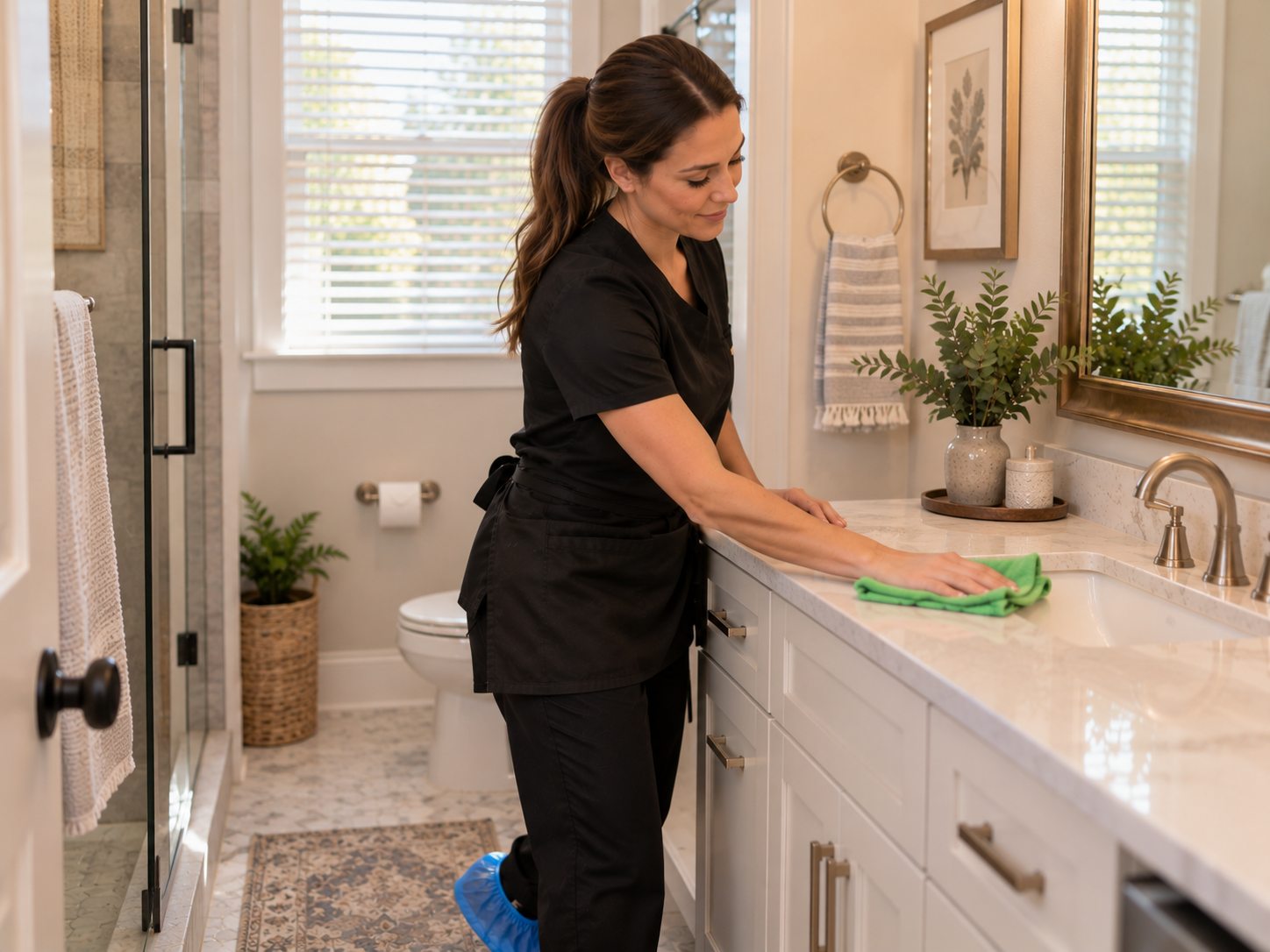
Natural disinfectants like tea tree oil and hydrogen peroxide are powerful enough to eliminate germs on bathroom surfaces without leaving behind harmful chemical residues. For a professional-grade clean that relies exclusively on these safer alternatives, explore our house cleaning services and let our trained team handle the scrubbing for you.
Frequently Asked Questions
Q: Is vinegar a natural disinfectant?
A: Household white vinegar works as a cleaner and a mild sanitizer rather than a true disinfectant. Its acetic acid reduces some bacteria on hard surfaces, but it is not EPA-registered to kill viruses. For genuine disinfecting, use 3% hydrogen peroxide or 70% isopropyl alcohol and respect the contact time.
Q: What is the difference between sanitizing and disinfecting?
A: Sanitizing lowers the number of bacteria on a surface and is not intended to kill viruses. Disinfecting kills bacteria and viruses, and only EPA-registered products may make that claim. Cleaning comes before either one, because soil on the surface blocks the active ingredient from reaching the germs.
Q: Can you mix vinegar and hydrogen peroxide?
A: Never combine them in one bottle. Together they form peracetic acid, which irritates skin, eyes and lungs. You can still use both on the same surface by spraying one, letting it sit, wiping it away, then applying the other from a separate bottle.
Q: How long should a natural disinfectant stay on the surface?
A: Most natural disinfectants need the surface to stay visibly wet for about 10 minutes. Hydrogen peroxide and vinegar solutions both sit in that range, 70% alcohol should be left to air dry, and steam needs roughly three minutes of direct contact at 175°F or hotter.
Q: Which surfaces should you keep vinegar away from?
A: Skip vinegar on marble, granite, travertine, limestone and other natural stone, plus unsealed grout, cast iron, aluminum and waxed or unfinished wood. The acid dulls and etches these surfaces permanently. Use warm water with a few drops of castile soap on stone instead.
The recommendations and recipes provided on the Organically Maid Blog are intended for informational purposes only. Please use caution and consult with a professional if you have any concerns or allergies. Organically Maid is not liable for any adverse effects or damages that may result from following the recommendations or recipes shared on this blog. Always follow manufacturers recommendations and proceed at your own risk.
Blog